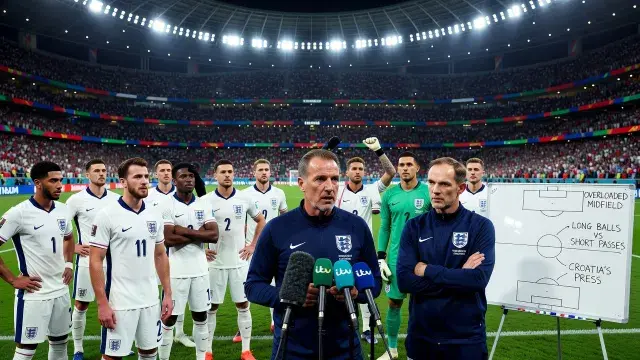
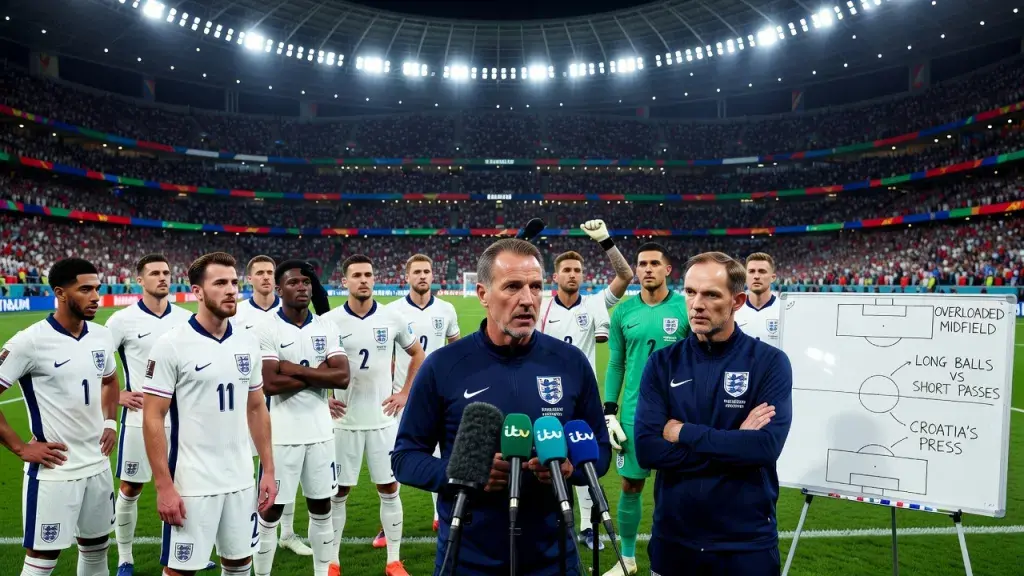
Anthony Barry did not spare his players when ITV's microphones caught him at half-time of England's 2026 World Cup opener against Croatia. The assistant coach's assessment - "a complicated and confusing first half" marked by "nervous energy" and muddled decision-making in possession - was unusually candid for a live broadcast, delivered moments after England had conceded. Whether it was the heat of the moment or a deliberate statement of standards, it revealed something meaningful about how Thomas Tuchel's staff think about this side and what they demand from it.
There is a school of thought, common among senior coaches, that assistants ought to shield players from public criticism mid-match, particularly on the grandest stage in the sport. That debate will likely simmer. Yet Barry's words were not entirely wrong, either. England's first half was disjointed. Jordan Pickford launched long from the first whistle, and they gifted Croatia a corner inside two minutes by overplaying in their own third - the kind of nervous, contradictory behaviour Barry was describing. Much like the niche focus required in disciplines such as sailing online betting, where reading conditions precisely is everything, England's ability to read the Croatia press in real time was painfully underdeveloped for the opening period. "We made some decisions where the energy was not free in our mind: playing long when we should play short, and short when we should play long," Barry told ITV. "Not playing through the gaps, so not allowing us to accelerate our game the way we wanted to."
Structure Without Execution
England's tactical blueprint for handling Croatia's press was clear enough in theory. Nico O'Reilly rolled into midfield from left-back, replicating the role he had perfected at Manchester City during the club season. The centre-backs split wide. Declan Rice drifted between deep central pockets and the left touchline. Jude Bellingham held the right side, with Elliot Anderson anchoring. The shape frequently became a loose diamond, designed to pack the middle of the pitch, create numerical overloads and offer short passing lanes through Croatia's lines.
The problem was execution. Rather than breaking lines on the ground through those congested central zones, England kept bypassing the structure entirely with balls in behind. Reece James played Bellingham and Noni Madueke into the Croatia back five's space from right-back; the pattern repeated with roles reversed when Bellingham went over the top for James. Harry Kane, drifting as far back as the centre-backs on one occasion to receive from Pickford, then attempted an extravagant diagonal under no pressure whatsoever. The one moment England genuinely unlocked the press in the first half - a sequence from Pickford to Anderson to John Stones, who fed O'Reilly and then Rice on a diagonal - was wasted when Rice declined a straightforward forward pass that would have released Anthony Gordon in space. England completed just six of 22 attempted long balls in the opening 45 minutes, a 27 per cent success rate. Pickford's 71 touches and 55 passes were the highest recorded by any goalkeeper across the tournament's opening round of fixtures, an indicator of how much the backline was recycling possession without ever truly threatening to penetrate.
Tuchel's Half-Time Reset and the Second-Half Response
Whatever was said in the dressing room went considerably further than Barry's broadcast critique. Kane described Tuchel's message as an appeal to identity: "If we lose we lose, but we lose in our way." The effect was immediate. Within two minutes of the restart, England were ahead. A 23-pass sequence - beginning from Croatia's own kick-off and working methodically left to right before waiting for the decisive moment - ended when Ivan Perisic stepped aggressively toward James at right-back, the Croatia centre-backs locked on, and both Bellingham and Madueke immediately read the space behind. Anderson's driven ball over the back five sent Bellingham clear to score. "Elliot's was pretty brilliant," Bellingham said afterwards. "The work that goes into creating those kinds of plays takes us weeks to get right." Long ball accuracy improved to 10 from 20 in the second half - 50 per cent - reflecting better timing rather than any change in England's underlying directness.
Croatia's second goal, however, highlighted the opposite danger. England sat deep without adequate pressure on the ball and were punished by a smart inside run from Perisic and a precise chipped pass from Mario Pasalic - a textbook example of the cardinal error Tuchel has spent his tenure trying to eradicate. England's counter-press in the early exchanges had been sharp and co-ordinated, nullifying Luka Modric to such an extent that the Croatia captain completed all 27 of his passes but moved the ball forward only four times before being substituted on 58 minutes. Sustaining that aggression across a full 90 minutes, without the defensive lapses that opened the door for Croatia's equaliser, is the cleaner version of this England side that Tuchel is still building toward.
Standards, Scrutiny, and What Comes Next
Barry's half-time comments, taken together with Kane's account of Tuchel's interval address, sketch a consistent picture of a coaching staff unwilling to accept below-par performances as good enough simply because they're at a World Cup. Tuchel has been explicit since his first press conference in the role about wanting England to mirror the physicality and intensity of the Premier League, and he built his squad selection around height, stamina and pace with that in mind. The squad delivered on that in the second half. The challenge now, as the tournament progresses, is starting matches as they finished this one - not needing a jolt from the bench and a direct conversation about identity to unlock the football they are clearly capable of playing.